
Let Love Rule
The power of leading with love.

“You’ve got to let love rule.”
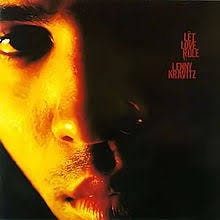
I have had this line from Lenny Kravitz circling my mind for weeks now. Not just as a lyric stuck on repeat, because it is a great song, but as a question. What does it actually mean to let love rule, not just in our personal lives but in how we lead, how we make decisions, how we hold power?
At the same time I have been reading The Supreme Gift by Paulo Coelho. It is a small book, almost deceptively so, yet it carries a weight that lingers. Coelho draws on the well known passage from Corinthians and reframes love not as sentiment but as a force that gives meaning to everything else. Without love, knowledge becomes hollow, achievement becomes brash, leadership becomes performance. With love, even the simplest act carries significance.
Perhaps this landed differently for me because of something I wrote recently in my post Why I Am No Longer Talking About Respect. In that piece I questioned the way respect is often positioned as the foundation of good leadership. Respect can be conditional. It can be transactional. It can even be withheld as a form of control. Love, on the other hand, asks something deeper. It is not earned through status. It is not granted selectively. It is practised.
There is a growing body of research that supports what many of us feel intuitively. Leadership rooted in care, compassion and connection leads to stronger outcomes for individuals and organisations. Studies on compassionate leadership show links to increased trust, psychological safety and performance (Boyatzis, Smith, and Blaize, 2006). Work on positive organisational scholarship highlights how love expressed through care and support fosters resilience and engagement (Cameron, 2012). Even in more traditional leadership literature, relational approaches grounded in empathy are associated with more sustainable influence (Goleman, Boyatzis, and McKee, 2013).
Yet love is still a word we hesitate to use in professional spaces. It feels too soft, too abstract, too exposed. We replace it with safer language. Respect. Civility. Professionalism. All important, yet none quite reaching the same depth.
Coelho’s message is clear. Love is not an accessory to leadership. It is the core.
So what does it look like to lead with love in practice
? I have been sitting with this question and returning to a simple framework that feels both human and actionable. HEART.
H is for Hear
To hear is more than to listen. It is to be present enough that another person feels received. Research on active listening shows that when people feel genuinely heard, it increases trust and reduces defensiveness (Rogers and Farson, 1957). In leadership this means creating space where voices are not filtered through hierarchy or expectation.
E is for Empathise
Empathy is not about agreeing. It is about understanding. Neuroscience research has shown that empathy activates neural pathways linked to social bonding and cooperation (Decety and Jackson, 2004). Leaders who practice empathy build environments where people feel seen, not just assessed.
A is for Attune
I considered analyse here, but attune feels closer to what love asks of us. Attunement is the ability to sense what is needed in a moment. It draws on emotional intelligence and situational awareness. Studies suggest that leaders who are attuned to emotional cues are better able to navigate complexity and foster connection (Goleman, 1998).
R is for Regard
This goes beyond respect. Regard is about holding others in unconditional positive regard, a concept rooted in humanistic psychology (Rogers, 1961). It is the practice of valuing people not for what they produce but for who they are. This is where love begins to shift culture.
T is for Talk
Love is not passive. It speaks. It names what matters. It addresses harm and invites truth. Research on courageous conversations highlights the importance of open dialogue in building trust and accountability (Edmondson, 2019). To lead with love is to speak with honesty and care at the same time.
What I am beginning to see is that love, when translated into practice, is not vague at all. It is disciplined. It requires attention, intention and courage. It also has a transcendental quality that is hard to fully explain. Love seems to move beyond individual interactions and shape the field in which those interactions happen. It changes what becomes possible.
There is evidence for this too. Studies on collective efficacy and group cohesion show that shared emotional bonds influence outcomes at a systemic level (Bandura, 2000). When love becomes part of how a group operates, it shifts norms, expectations and behaviours in ways that extend far beyond any one leader.
This brings me back to where I started. Let love rule.
Not as a slogan. Not as an aspiration we revisit when things feel easy. But as a deliberate choice about how we show up in moments of tension, uncertainty and power.
If respect was the language I once leaned on, love is the practice I am learning to trust.
And perhaps that is the invitation.
To lead in a way where people do not just feel managed or respected, but deeply valued and connected.
Let love rule not because it is easy, but because it is the only thing that makes everything else matter.
Love is not a soft alternative to leadership. It is the force that makes leadership worth following.
References
Bandura, A. (2000). Exercise of human agency through collective efficacy. Current Directions in Psychological Science, 9(3), 75–78.
Boyatzis, R. E., Smith, M. L., and Blaize, N. (2006). Developing sustainable leaders through coaching and compassion. Academy of Management Learning and Education, 5(1), 8–24.
Cameron, K. S. (2012). Positive leadership: Strategies for extraordinary performance. Berrett-Koehler.
Decety, J., and Jackson, P. L. (2004). The functional architecture of human empathy. Behavioral and Cognitive Neuroscience Reviews, 3(2), 71–100.
Edmondson, A. C. (2019). The fearless organization: Creating psychological safety in the workplace for learning, innovation, and growth. Wiley.
Goleman, D. (1998). Working with emotional intelligence. Bantam Books.
Goleman, D., Boyatzis, R., and McKee, A. (2013). Primal leadership: Unleashing the power of emotional intelligence. Harvard Business Review Press.
Rogers, C. R. (1961). On becoming a person: A therapist’s view of psychotherapy. Houghton Mifflin.
Rogers, C. R., and Farson, R. E. (1957). Active listening. Industrial Relations Center of the University of Chicago.